+420 777 008 739


Why does magnification matter during treatment?
A tooth is made up of very fine structures. Root canals can be narrow, curved or hidden, and a small crack may be all but invisible to the naked eye.
A microscope lets the dentist work in detail and tell healthy tissue from damaged tissue more accurately. That matters above all where we want to preserve as much of your own tooth as possible.
When is a dental microscope used?
Patients most often encounter it during endodontic root canal treatment. Its uses, however, are far wider.
It helps, for example, with:
- finding hidden or very narrow root canals,
- re-treating a tooth that has been treated before,
- diagnosing small cracks,
- checking the margins of fillings and crowns,
- removing damaged tissue precisely,
- aesthetic and restorative reconstruction of teeth.
Can a microscope help save your own tooth?
In some cases, yes. Magnification lets the dentist find the cause of the problem more easily and treat areas that would be hard to reach without it.
A typical example is a tooth after unsuccessful earlier root canal treatment. If the problem is caused by an untreated canal or another complication, working more precisely under a microscope can improve the chance of saving the tooth.
It always depends, though, on the actual condition of the tooth and the surrounding tissue.
Is treatment under a microscope different for the patient?
From the patient’s point of view the procedure does not change in any fundamental way. The microscope is primarily a tool the dentist uses to work more precisely.
Treatment can take longer than a simple routine procedure, because the dentist works in greater detail and checks each part of the area being treated. The advantage is greater precision and the ability to intervene more selectively.
A microscope is not just extra technology
The device on its own does not guarantee a good result, of course. What decides it is the dentist’s experience, correct diagnosis and a well-chosen course of treatment.
In the hands of an experienced specialist, though, a dental microscope allows a level of detail that was once hard to achieve in dentistry.
When should you book an examination?
If a tooth hurts repeatedly, is sensitive when you bite, has had root canal treatment before, or you have been told it should be extracted, it can be worth having the situation assessed again.
At ONEDENT clinic we use a dental microscope for treatment that calls for maximum precision and detailed control.
Book a consultation and find out which treatment options suit your case.
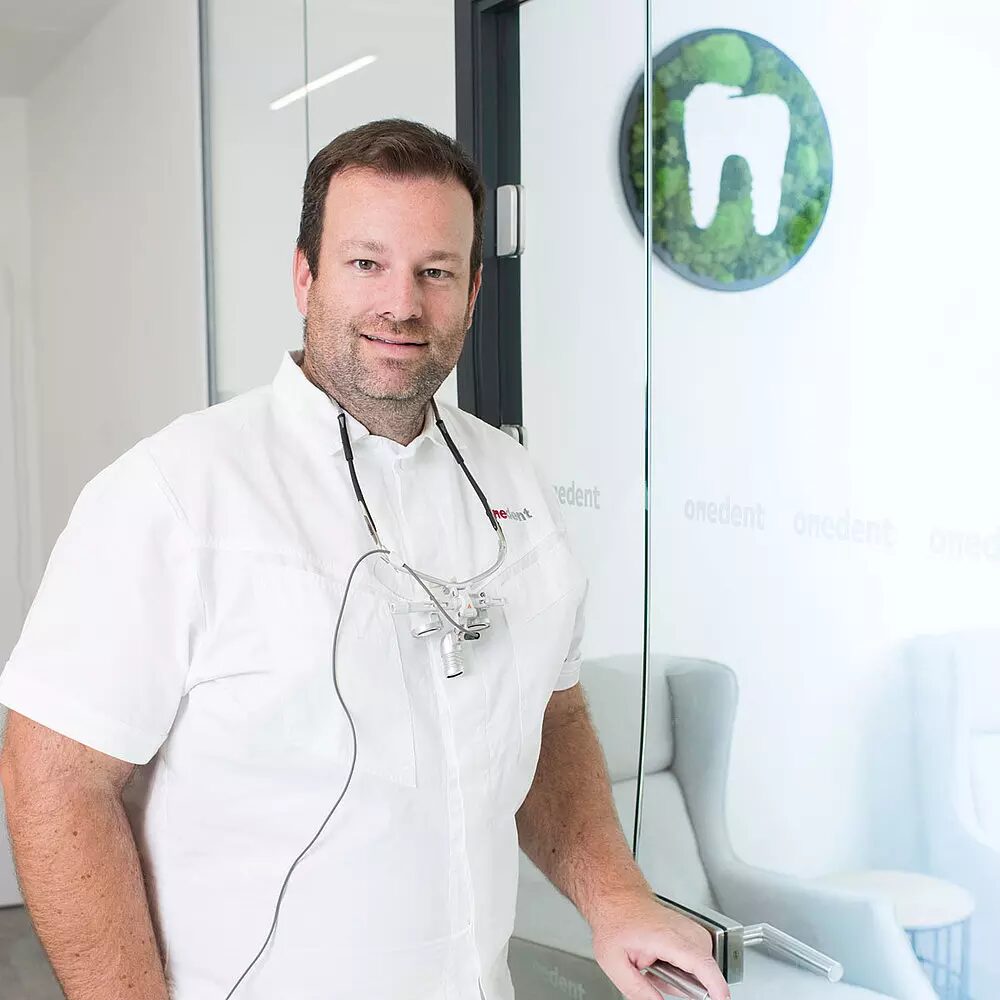
 Article author


 Approximate reading time: 5 min
  Updated: 24.09.2026